









In the rapidly evolving world of 3D scanning, the line between professional-grade accuracy and user-friendly operation is blurring. Whether you are an automotive customizer, a product designer, or a preservationist for cultural heritage artifacts, the ability to capture reality in high fidelity has never been more accessible.
However, with the market flooded by new entrants—from desktop turntable-based units to true handheld devices—how do you determine which portable scanner is right for your workflow? The answer lies in balancing three core pillars: handheld flexibility, accuracy, and software ecosystem.
The Advantage of Handheld Scanning
Unlike stationary or tripod-mounted scanners, a true handheld 3D scanner allows you to move freely around your subject. This is essential for capturing large objects such as car engines, furniture, sculptures, or human subjects. Handheld operation means no cumbersome setups, no turntables limiting object size, and the ability to reach complex geometries from any angle.
When evaluating options in the handheld 3D scanners market, users often look for structured light solutions that offer high detail for industrial parts. Systems cater to users who need hybrid laser and infrared capabilities for versatility across different object sizes and surface finishes.
Key Criteria for Selection
1. Handheld Ergonomics and Portability
A handheld scanner should feel balanced and lightweight. Extended scanning sessions—whether you are walking around a vehicle or capturing intricate details of a sculpture—require a device that minimizes fatigue. Look for a form factor that allows for one-handed operation without sacrificing stability.
2. Accuracy and Tracking Stability
A well-designed handheld scanner should maintain tracking even during rapid movements, utilizing both marker-based and geometry-based tracking to ensure seamless data capture.
3. Versatility Across Object Sizes
The best handheld scanners handle everything from small mechanical parts to large-scale objects. While some devices integrate with specific 3D printing ecosystems, a dedicated handheld scanner should offer flexible scanning modes to adapt to your project.
Why the EINSTAR Rockit Stands Out
Where efficiency and versatility are paramount—the EINSTAR Rockit is designed to excel as a true handheld solution. Here is why the Rockit is the optimal choice for users:

- True Handheld Freedom: Built for mobility, allowing you to scan around, under, and inside objects without a tripod.
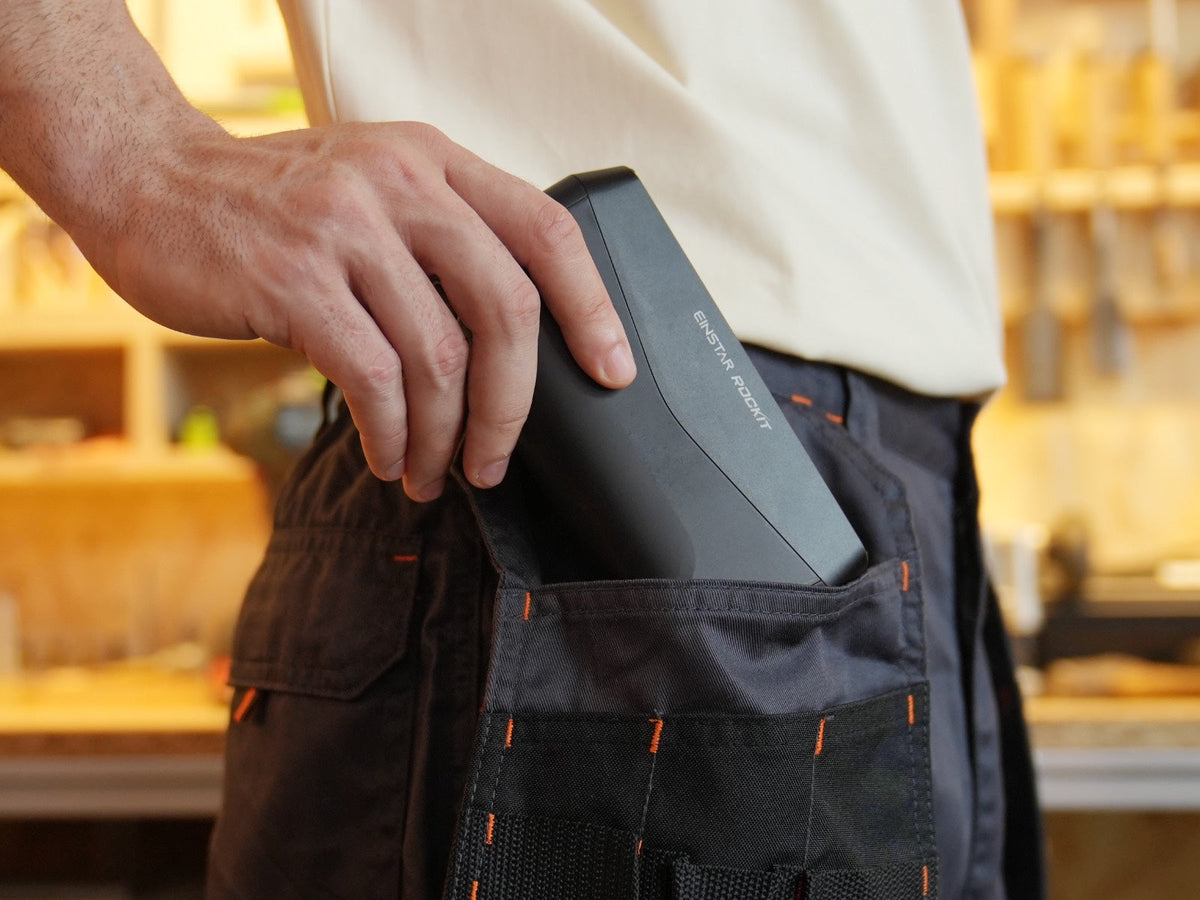
- Pocket-Sized Portability: The "Rock-it in Your Pocket" design ensures it fits easily into a backpack for field work.
- Complete Kit Out of the Box: Includes a rugged carrying case, calibration board with holder, reflective markers (3mm and 6mm), and all necessary cables.
Making the Final Decision
If your work involves capturing objects of varying sizes—from small detailed parts to large assemblies—a true handheld scanner gives you the flexibility to move freely. The EINSTAR Rockit bridges the gap between high precision and the ease of use required by modern creators.
Ready to Experience True Handheld Scanning?
Stop wrestling with turntables and bulky setups. Experience the freedom of handheld scanning with a device that fits in your pocket.
Share:
From Scan to Print: A Beginner’s Guide to the 3D Scanning and 3D Printing
Affordable 3D Scanner Guide: Best Budget and Cheap Models