









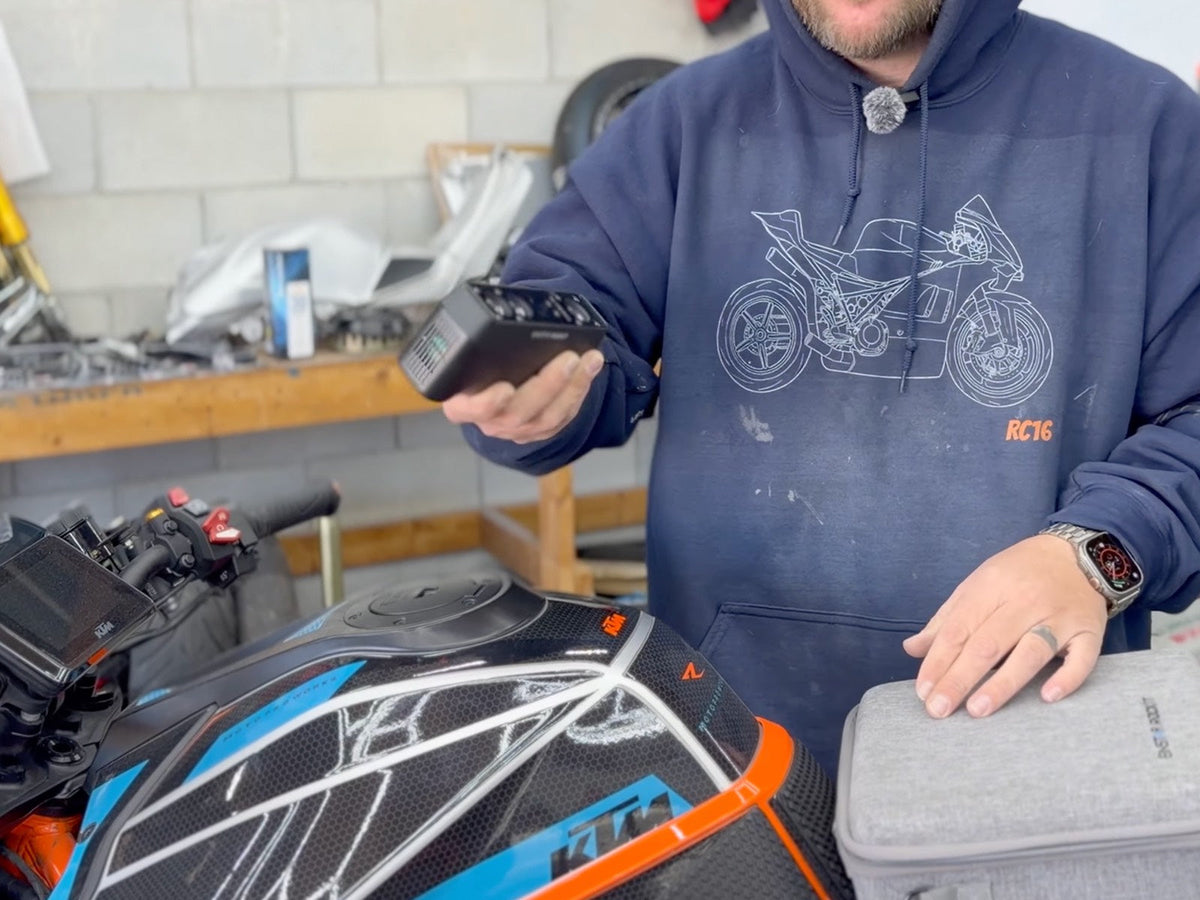
If you own a Bambu Lab 3D printer, you already know the feeling of printing at warp speed with flawless quality. But let’s be honest: downloading STL files from the internet is fun. True creation starts when you can scan the world around you.
Whether you want to reverse-engineer a broken car part, create a custom mount for your workshop, or scan a sculpture to print it in carbon-fiber reinforced nylon, you need a 3D scanner that matches the speed, precision, and ease of use of your Bambu Lab printer.
If you’re looking for the best 3D scanner for Bambu Lab, this guide will help you understand what makes a scanner compatible with Bambu Studio workflows and how to choose the right option for your parts, materials, and projects.

Why You Need a 3D Scanner for Your Bambu 3D Printer
Bambu Lab printers have made desktop 3D printing feel fast, polished, and surprisingly low-stress. With quick print speeds, AMS multi-color printing, and Bambu Studio keeping the workflow tidy, the printer side is usually the easy part.
The catch? You still need a model worth printing. That is why many Bambu Lab users start looking for a scanner that fits their 3D printing workflow. In practice, a 3D scanner for Bambu Lab users is less about fixing the printer and more about solving the model problem: real-world parts are often hard to download, hard to measure, and annoying to rebuild from scratch.
A scanner comes in handy when you need to:
- Replace a broken or discontinued part when there is no ready-made STL file online
- Capture tricky geometry, such as curves, clips, holes, snap-fit details, and mounting points that are hard to measure by hand
- Create custom mounts, brackets, holders, jigs, and workshop tools that actually fit the objects around them
- Reverse-engineer car parts, trim pieces, adapters, or other replacement parts without starting from a blank CAD file
- Use a real object as a reference for CAD redesign, especially when fit and alignment matter
- Cut down on failed test prints caused by rough measurements, guesswork, or missing details
In other words, a Bambu Lab scanner workflow fills the gap between the physical world and your print bed. You scan the object, clean up the mesh, export the model, bring it into Bambu Studio, and print or redesign from there.
How to Choose a 3D Scanner Compatible with Bambu Lab
A Bambu Lab printer does not need a scanner from the same brand. What it needs is a clean model file that Bambu Studio can work with. So if you are comparing a Bambu Lab 3D scanner or any 3D scanner for Bambu Lab, think about what will happen after the scan, not just how impressive the specs look on paper.
1. Can It Capture the Details That Affect Fit?
For 3D printed parts, the small stuff is usually what makes or breaks the print: screw holes, clips, grooves, edges, snap-fits, and mounting points. If those details come out soft or incomplete, your printer will still print beautifully, but the part may not fit.
2. Can It Handle Real-World Materials?
Most parts on your bench are not clean white demo objects. They are black plastic, glossy covers, shiny brackets, reflective car trim, or worn tool parts. If you plan to scan repair parts, car parts, or workshop components, material adaptability matters a lot.
3. Can It Scan More Than One Type of Object?
A small adapter, a car trim piece, a tool housing, and a sculpture all ask different things from a scanner. A practical scanner for a Bambu 3D printer workflow should handle both close-up detail and larger objects, so you are not stuck with only one kind of scan.
4. Is the Cleanup Process Manageable?
A scan is rarely the final printable file. You may still need to remove extra data, fill holes, check scale, simplify the mesh, or rebuild part of the model in CAD. A good Bambu Lab scanner setup should make that cleanup feel manageable, not like another full project.
5. Can You Export the Right File?
For most scan-to-print jobs, STL is the easiest format to bring into Bambu Studio. OBJ is useful when color or texture matters, and 3MF can help in a more complete 3D printing workflow. If you are choosing a 3D scanner for a Bambu 3D printer, flexible export formats are a must.
6. Can You Move Around the Part Comfortably?
Wireless scanning is helpful when you need to walk around a larger object, work in a garage, or scan something that cannot easily be moved. A cable connection is still worth having for longer scans or unstable Wi-Fi. In real use, having both options is simply less stressful.
EINSTAR 2: Practical 3D Scanner for Everyday Bambu Projects
EINSTAR 2 is a good fit for Bambu Lab users who want scanning to feel as clean and approachable as printing. If you mainly print replacement parts, workshop tools, custom mounts, brackets, holders, or creative projects, it gives you a practical way to turn real objects into usable 3D models without making every job feel like a full reverse-engineering project.

1. Why EINSTAR 2 Works Well for Bambu Lab Scan-to-Print Projects
For most Bambu Lab users, these are the features that make EINSTAR 2 easy to live with:
- Beginner-friendly from the start: Built for creators, hobbyists, and first-time scanner users who want serious results without a steep learning curve.
- Hybrid infrared + laser scanning: 17 blue laser parallel lines help capture fine details, while IR VCSEL is useful for faster scans on larger objects.
- Wireless and wired PC connection: Scan freely over built-in Wi-Fi, or switch to USB Type-C when you want a steadier connection.
- Built-in swappable battery: One 5500 mAh battery supports mobile scanning, so you are not tied to a power cable while moving around the object.
- EXStar Hub software: Clean, align, measure, simplify, fill holes, adjust texture, and prepare your scan before bringing the model into Bambu Studio.
- Better for real-world materials: Makes it easier to scan dark and shiny objects without spray, including plastic parts, tools, covers, and workshop components.
- Flexible export formats: Export STL, OBJ, PLY, 3MF, or ASC depending on whether you want to slice, edit, or archive the scan.
2. Key EINSTAR 2 Specs for Bambu Lab Users
If you like to check the hardware before making a decision, these are the EINSTAR 2 specs worth knowing:
| Key EINSTAR 2 Specs | Details |
|---|---|
| Scan modes | Laser HD, IR Rapid |
| Light source | 17 blue laser parallel lines, IR VCSEL |
| Resolution | Up to 0.05 mm resolution |
| Connection | Built-in Wi-Fi, USB Type-C |
| Battery | One 5500 mAh swappable battery |
| Weight | 420 g with battery |
| Output formats | STL, OBJ, PLY, 3MF, ASC |
| Texture camera | 5MP |
| Software | EXStar Hub (WinOS/macOS) |
3. How to Use EINSTAR 2 Before Printing with Bambu Studio
If you want to see the workflow before trying it yourself, the tutorial below walks through how EINSTAR 2 handles scanning, cleanup, and file preparation for 3D printing.
Choose EINSTAR 2 if you want a practical, portable scanner for your Bambu 3D printer workflow. It is the everyday option for Bambu Lab users who want fewer rough measurements, fewer failed test prints, and more useful printed parts.
EINSTAR Rockit: A Better Bambu 3D Scanner for Complex Work
EINSTAR Rockit makes the most sense when the part on your bench is too detailed, too curved, or too awkward to measure by hand. From car trim and metal components to small clips, grooves, and custom mounts, it is built for the scan-to-print jobs where a simple reference photo or rough CAD sketch is not enough.

1. Why EINSTAR Rockit Fits Advanced Bambu Lab Workflows
For Bambu Lab users who want more than everyday scanning, these are the Rockit features that matter most:
- Pocket-sized pro performance: Rockit is easy to carry from your desk to a workshop, garage, or job site, without the bulky setup of a stationary scanner.
- Clean Bambu Lab-style workflow: Built for users who value speed, simple setup, and less clutter, so scanning feels closer to the smooth workflow they already expect from Bambu Lab.
- Detail that affects fit: Capture curves, holes, clips, grooves, edges, and mounting points that are difficult to measure by hand but important for functional parts.
- better for reverse engineering and automotive work: 19 + 19 crossed laser lines, 7 blue laser parallel lines, and IR VCSEL help with complex geometry, deep holes, metal parts, car components, and discontinued parts.
- Easy to start, powerful to grow: EXStar Hub keeps the workflow approachable while supporting alignment, hole filling, measurement, simplification, texture adjustment, and other model-prep tools.
- Wireless or wired, with scan feedback: Use built-in Wi-Fi without an extra hub or adapter, switch to USB Type-C when needed, and rely on on-screen capture, scan indicator lights, and smart audio feedback while scanning.
2. Key EINSTAR Rockit Specs for Bambu Lab Users
If you like to check the hardware before making a decision, these are the EINSTAR Rockit specs worth knowing:
| Key EINSTAR Rockit Specs | Details |
|---|---|
| Scan modes | Laser HD, IR Rapid |
| Light source | 19 + 19 crossed laser lines, 7 blue laser parallel lines, IR VCSEL |
| Resolution | Up to 0.05 mm resolution |
| Connection | Built-in Wi-Fi, USB Type-C |
| Battery | One 5500 mAh swappable battery |
| Weight | 425 g with battery |
| Texture camera | 5MP |
| Output formats | STL, OBJ, PLY, 3MF, ASC |
| Software | EXStar Hub (WinOS/macOS) |
3. How to Use EINSTAR Rockit Before Printing with Bambu Studio
If you want to see the workflow before trying it yourself, the tutorial below walks through how EINSTAR Rockit handles scanning, cleanup, and file preparation for 3D printing.
Which 3D Scanner for Bambu Lab Should You Choose?
Look at what usually lands on your workbench. If it is mostly brackets, covers, holders, classroom projects, or simple repair parts, you probably want something easy to pick up and use often. If it is car trim, metal hardware, tight grooves, snap-fit clips, or parts that make calipers feel useless, you will want more scanning headroom.
That is the real difference when choosing the best 3D scanner for Bambu Lab work: not “basic vs advanced,” but everyday convenience vs extra capability for tougher parts.
| What’s on Your Workbench | Better Fit | Why |
|---|---|---|
| Brackets, covers, holders, and repair parts | EINSTAR 2 | A practical Bambu Lab scanner choice for frequent scan-to-print projects. |
| Classroom, hobby, and creative projects | EINSTAR 2 | Friendly for new users, art objects, learning projects, and simple repairs. |
| Everyday projects now, harder projects later | EINSTAR Rockit | Handles simple scans too, with more room for detail and tougher surfaces. |
| Car trim, clips, mounts, and metal parts | EINSTAR Rockit | A better fit when the part is harder to measure and needs cleaner reference data. |
| Grooves, holes, small features, and reverse engineering | EINSTAR Rockit | More suitable for detail-heavy projects before redesigning or printing. |
Choose EINSTAR 2 if most of your work involves everyday Bambu Lab projects. Choose EINSTAR Rockit if you want a more capable Bambu 3D printer scanner for complex and everyday scan-to-print work
How EINSTAR 3D Scanners Work with Bambu Studio
Once the scan is finished, getting it ready for your Bambu Lab printer is pretty straightforward. The scanner gives you the model file; Bambu Studio handles the slicing.
- Step 1: ScanUse EINSTAR 2 or EINSTAR Rockit to capture your object, whether it is a bracket, tool, sculpture, replacement part, or reference model. For many Bambu Lab 3D scan projects, knowing how to scan an object for 3D printing is the starting point for repair, redesign, or printing.
- Step 2: Repair/EditUse EXStar Hub or another mesh/CAD tool, such as MeshMixer, to clean up the scan, remove extra data, fill holes where needed, and check the scale.
- Step 3: ExportExport the cleaned model as STL, OBJ, or 3MF, depending on how you plan to edit, slice, or print it.
- Step 4: Import into Bambu StudioDrag and drop the file into Bambu Studio.
- Step 5: Scale & SliceA clean scan helps cut down on dimension guesswork, but it is still worth checking scale, orientation, wall thickness, and supports before slicing.
- Step 6: PrintSend the sliced file to your Bambu Lab printer. Whether you use PLA, PETG, ASA, or another material, better scan data gives you a better starting point for parts that need to fit.
FAQ About Bambu Lab 3D Scanner
We also rounded up a few questions Bambu Lab users often ask about scanner for Bambu 3D printer. If you are still comparing options, these quick answers may help clear things up.
Q1: Can you use a 3D scanner with a Bambu Lab printer?
Yes. A scanner does not need to connect directly to the printer. You scan the object, clean or repair the model, export it as STL, OBJ, or 3MF, and import it into Bambu Studio for slicing.
Q2: Does Bambu Lab have a 3D scanner app?
Many users search for a Bambu Lab 3D scanner app, but Bambu Studio itself is a slicer, not a handheld object scanner. App-based or AI scanning tools can be useful for light experiments, but they are not the same as a dedicated 3D scanner for accurate and high quality object capture.
Q3: What file format works best for a 3D scanner for 3D printing Bambu Lab workflow?
For most scan-to-print jobs, STL is the easiest choice. OBJ can be useful when color or texture matters, and 3MF works well for modern 3D printing workflows. EINSTAR 2 and EINSTAR Rockit support STL, OBJ, PLY, 3MF, and ASC.
Q4: Do scanned models need cleanup before 3D printing?
Usually, yes. A Bambu Lab 3D scan may need trimming, hole filling, scale checks, mesh simplification, or CAD cleanup before it is ready to print. Better scan data simply gives you a better starting point.
Q5: What is the best 3D scanner for Bambu Lab X1 Carbon?
The best 3D scanner for Bambu Lab printer setups depends on your projects, not just the printer model. For everyday scan-to-print work, EINSTAR 2 is a practical choice. For complex parts, automotive work, metal components, or fine details, EINSTAR Rockit is the ber fit.
Conclusion
A Bambu Lab printer can print fast, but you still need the right model before anything reaches the build plate. That is why many users look for a 3D scanner compatible with Bambu Lab: it helps turn real objects into printable models with less measuring, guessing, and redesign work.
Choose EINSTAR 2 for everyday maker projects like brackets, holders, repair parts, and creative prints. Choose EINSTAR Rockit if you often scan automotive parts, metal components, small details, or complex geometry. The best 3D scanner for Bambu Lab users is the one that fits the parts they actually want to make.
Find the Right 3D Scanner for Your Bambu Lab Workflow
From capturing real-world objects to creating custom models for 3D printing, explore 3D scanners that make the process faster and easier.
Explore Einstar Right now
Share:
Best Budget 3D Scanner for Artists and Designers: Unleash Creativity Without Break-up
Why 3D Printing Needs a 3D Scanner: Unlock True Creativity with EINSTAR 2