









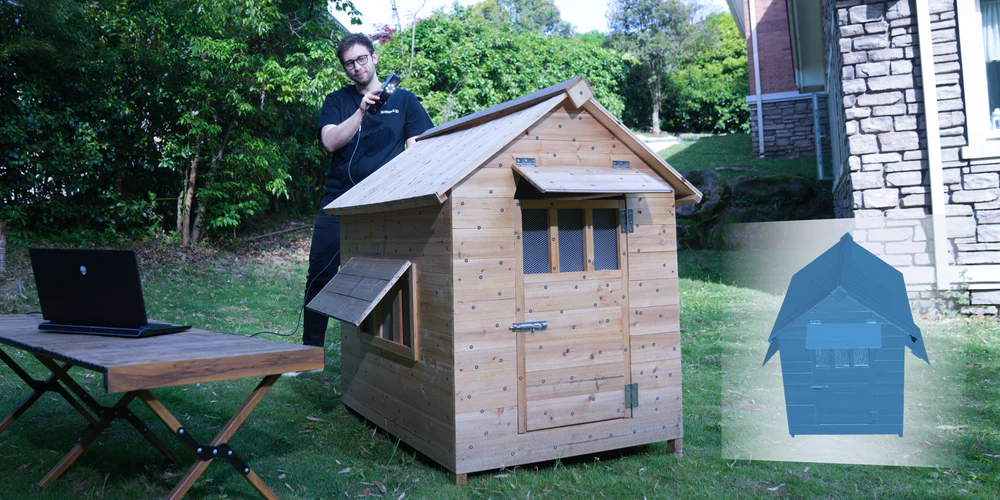
The art of furniture restoration and customization has long been a delicate balance of preserving history while meeting modern needs. With the growing demand for personalized home décor, more consumers and small studios are turning to innovative tools to enhance their craftsmanship. One such tool is 3D scanning, which is transforming how professionals approach furniture restoration, customization, and design. Among the available options, consumer-grade scanners like the EINSTAR and EINSTAR VEGA offer practical solutions for achieving precise results without requiring heavy investment or technical expertise.

What is 3D Scanning in Furniture Restoration?
3D scanning involves capturing the exact dimensions and surface details of an object through light-based technology, creating a digital model of the object. In the case of furniture restoration, this technology can be used to scan an antique chair, a vintage table, or even a custom-made cabinet. Once scanned, the digital model can be edited, replicated, or printed, offering an quality blueprint for modifications or repairs.
In the past, furniture restoration required extensive manual work, from measuring components by hand to carving out intricate details. With 3D scanning, these processes can be streamlined, saving time, reducing errors, and improving result quality.
How Can 3D Scanning Help in Customizing Furniture?
Customization is a key element of modern furniture design, allowing individuals to express their unique style. With 3D scanning, consumers and small businesses can take a previously existing piece of furniture, scan it, and adjust its design according to their preferences. Whether it's changing the dimensions of a chair, creating a personalized engraving, or replicating a design element, 3D scanning simplifies the customization process.
For small studios or hobbyists, this level of precision allows them to offer tailor-made furniture designs that would otherwise require expensive tools or a large workspace. The EINSTAR and EINSTAR VEGA are portable, lightweight, and easy to use, making them an excellent choice for those who want to achieve professional-level results without the need for complex machinery.
Simplifying Furniture Restoration with 3D Scanning
Restoring antique or damaged furniture often involves replacing missing parts, which can be challenging when the original components are no longer available. 3D scanning helps restore these items by creating an quality digital model of the existing parts, which can then be used to generate replacements. For example, if the backrest of a chair is broken and its design is complex, a 3D scan of the unbroken section can be used to reconstruct a new part that fits seamlessly with the original.
Additionally, 3D scanning can aid in repairing or replicating intricate carvings, textures, and patterns that are essential to the piece's original aesthetic. This process is significantly more efficient than traditional methods and ensures that restorations are as true to the original as possible.
Practical Use Cases for Small Studios
For small studios or hobbyists who focus on furniture restoration or customization, the EINSTAR and EINSTAR VEGA offer a user-friendly solution. These 3D scanners can help in scanning small to medium-sized objects, including chairs, tables, and decorative pieces, enabling the creation of digital replicas, modifications, or even 3D-printed components for repairs.
Whether it's preserving the integrity of a family heirloom or designing a new piece from scratch, these scanners make it easier to work with great quality. Plus, with their compact design, users can scan objects in their studio or on-site without the need for extensive equipment or complicated software setups.
Conclusion
The integration of 3D scanning into furniture restoration and customization opens up new possibilities for scanning quality, efficiency, and creativity. By using tools like the EINSTAR and EINSTAR VEGA, small businesses and enthusiasts can save time, reduce errors, and produce high-quality results. The ease of use and portability of these scanners make them a valuable tool for anyone looking to take their furniture restoration or design projects to the next level. Whether you are restoring an antique piece or creating a custom design, 3D scanning can help you achieve the results you envision.
Share:
How 3D Scanning Supports Personalization in Product Design
Optimizing DIY and Home Repair Projects with 3D Scanning