









As 3D scanners become more accessible, the market is filled with devices that appear similar on paper but perform very differently in real applications. For workshops, makers, and small businesses, choosing the right scanner is less about marketing claims and more about practical performance.
This guide breaks down the key factors professionals actually consider when selecting a best 3D scanner for daily use — from mobility and scanning technology to workflow efficiency.
Wireless vs Wired 3D Scanners: Why Mobility Matters
Many traditional scanners rely on cables, external batteries, or additional accessories. While functional, these setups often limit movement and slow down scanning, especially when working with larger objects or tight spaces.
A modern wireless 3D scanner offers clear advantages in workshop environments: greater freedom of movement, faster setup, and fewer physical constraints during scanning.
For users who scan vehicles, machinery, or large components, wireless operation can significantly improve efficiency and comfort.

Laser or Infrared? Understanding Scanning Technologies
One of the most common questions buyers ask is whether to choose a laser-based scanner or an infrared solution. In reality, both technologies serve different purposes.
A laser 3D scanner is typically preferred for capturing sharp edges, fine features, and detailed geometry, making it ideal for reverse engineering and mechanical parts.
Infrared scanning, on the other hand, excels at fast coverage and smooth tracking, especially on medium to large objects. Scanners that combine both technologies offer greater flexibility across different tasks.
Why Marker-Free Scanning Is Becoming the New Standard
Marker placement has long been a time-consuming step in laser scanning workflows. While effective, it adds preparation time and increases overall project duration.
Marker-free laser scanning is increasingly favored by professionals because it reduces setup complexity and allows users to move directly from object to data capture. For feature-rich objects, this approach delivers faster results with less effort.
Entry-Level Does Not Mean Limited
The term “entry-level” is often misunderstood. Today, a well-designed entry-level scanner can deliver professional results without the cost or complexity of high-end industrial systems.
The key is finding a device that balances performance, usability, and price — a scanner that can grow with your workflow rather than restrict it. This is why many workshops now look for the best entry-level 3D scanner rather than the cheapest option available.
Portability and Comfort for Long Scanning Sessions
Scanning is rarely a one-minute task. Weight, ergonomics, and form factor directly affect usability, especially during long sessions.
A portable 3D scanner with a compact, lightweight design reduces fatigue and allows operators to focus on data quality rather than handling discomfort.
For mobile workflows and on-site scanning, portability is not a luxury — it is a requirement.
Handling Dark and Reflective Surfaces
Automotive and manufacturing environments frequently involve dark or reflective materials. Not all scanners handle these surfaces well, often requiring spray or additional preparation.
Modern scanning solutions that can directly capture black or reflective objects offer a cleaner, faster workflow and reduce the need for consumables.
Indoor and Outdoor Scanning Capability
Another factor often overlooked is lighting conditions. Many scanners perform well indoors but struggle in bright environments.
For users who scan vehicles, large parts, or objects outside the studio, choosing a scanner capable of operating in high ambient light is essential. This ensures consistent results regardless of location.
Who Should Consider a Hybrid 3D Scanner?
Hybrid scanners that combine laser and infrared technologies are well suited for users who work with a wide variety of objects. From small precision parts to medium and large components, a hybrid system reduces the need for multiple devices.
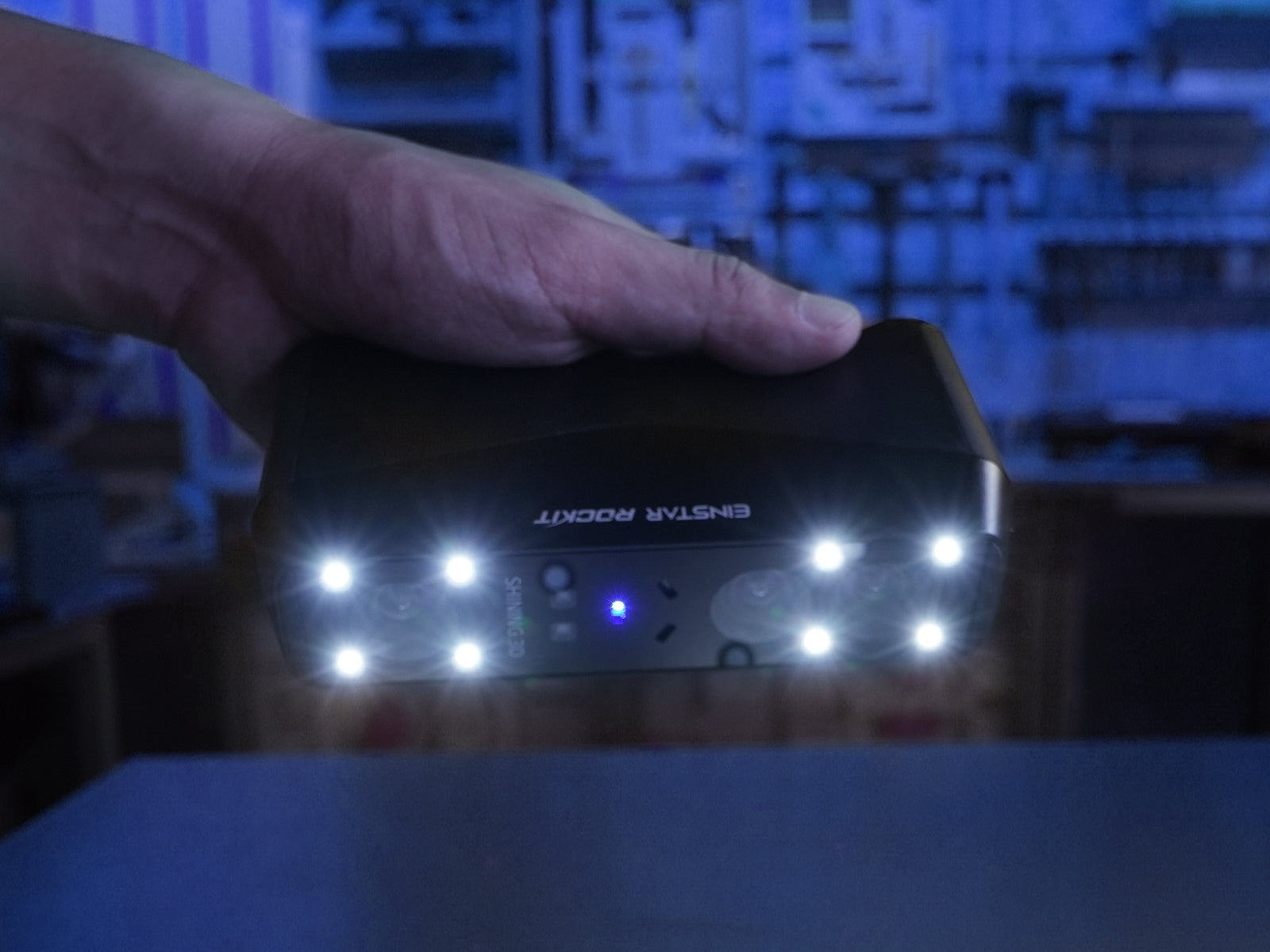
Within the EINSTAR 3D scanner series , hybrid designs are positioned to cover the widest range of real-world applications.
Conclusion: Choosing a Scanner That Matches Your Workflow
Selecting the right 3D scanner is not about chasing specifications — it is about understanding how the device fits into your daily workflow. Wireless mobility, laser precision, marker-free operation, and adaptability across different object sizes all play a crucial role.
For workshops and makers seeking a practical balance between performance and accessibility, modern wireless and hybrid scanning solutions represent the most forward-looking choice.
Share:
EINSTAR Rockit as Your Gateway to 3D Creativity
Best 3D Scanner for Automotive Applications: What Professionals Really Need