









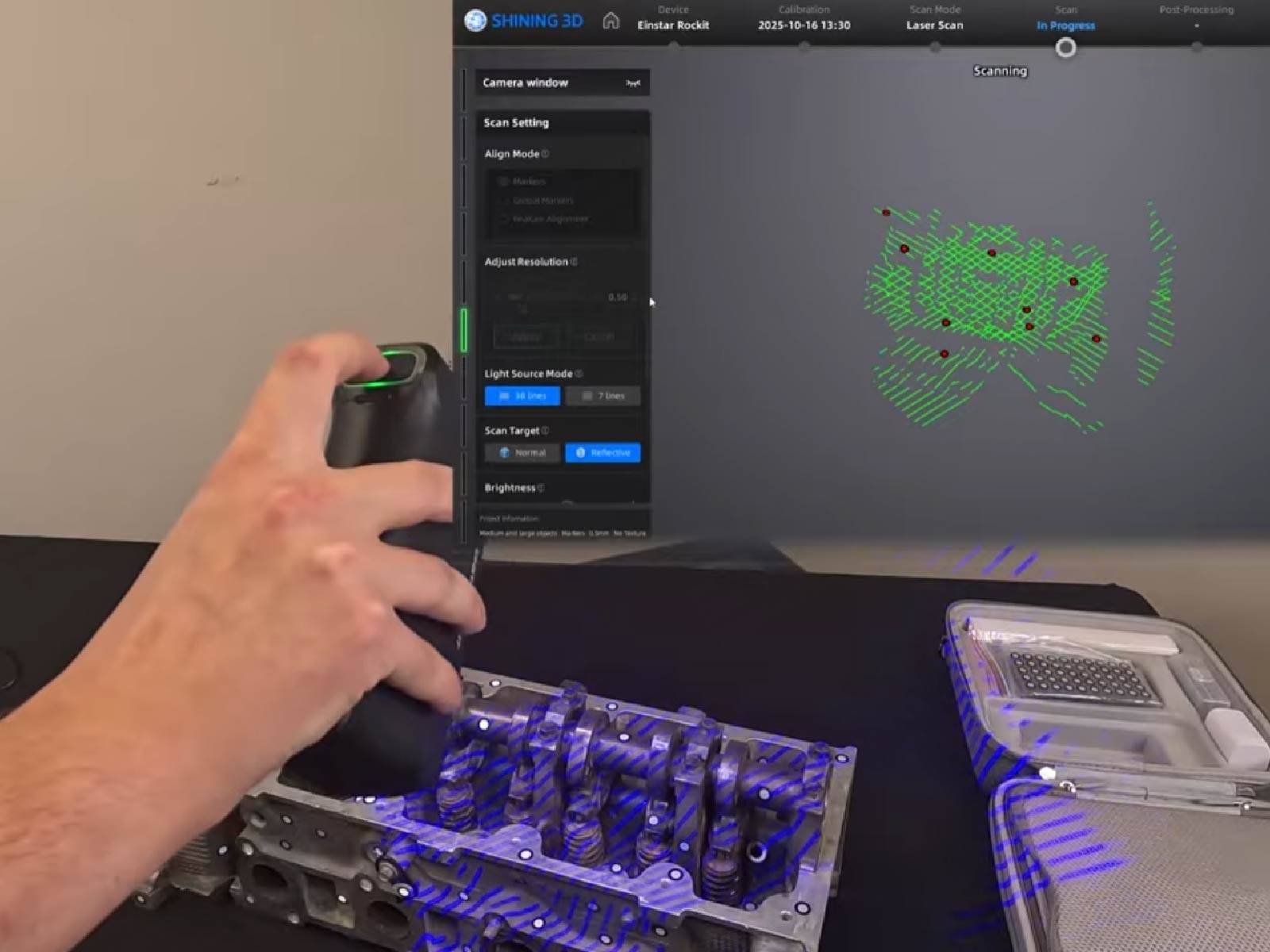
3D scanning has become an essential tool for makers, engineers, designers, and DIY creators. It allows real-world objects to be captured and turned into digital models for modification, reproduction, and creative development.
Whether you are working on 3D printing, reverse engineering, or personal DIY projects, the right scanner can significantly improve efficiency and expand what you can create.
Why 3D Scanners Matter in Modern Workflows
Instead of building everything from scratch, 3D scanners allow you to digitize physical objects and integrate them directly into your design process.
Common use cases include:
- Creating 3D printable models from real objects
- Reverse engineering mechanical or replacement parts
- DIY prototyping and product development
- Cosplay props and creative design
- Educational and maker projects
This makes 3D scanning a practical bridge between physical objects and digital design.

What to Consider When Choosing a 3D Scanner
Choosing the right scanner is less about specifications and more about how it performs in real workflows.
1. Workflow Efficiency
A good scanner should help you move quickly from scan to usable model.
Look for:
- Smooth scanning experience
- Simple setup and operation
- Fast export to usable file formats
A streamlined workflow saves more time than focusing only on specifications.
2. Tracking Stability
Stable tracking ensures consistent alignment while scanning.
This helps:
- Reduce scan interruptions
- Avoid broken or incomplete models
- Maintain smooth data capture
Especially important for reverse engineering and DIY projects with complex shapes.
3. Versatility Across Projects
A strong 3D scanner should handle multiple applications:
- Small mechanical parts
- Medium-sized objects
- Organic shapes and creative models
- Mixed surface materials
Versatility ensures long-term value across different workflows.
4. Real-World Adaptability
In practical use, objects are rarely ideal.
A capable scanner should handle:
- Dark surfaces
- Reflective materials
- Complex geometry
- Irregular shapes
Real-world adaptability is essential for consistent results.
5. Software Experience
Scanning is only part of the process. Software determines how usable your results are.
Good software should provide:
- Automatic scan alignment
- Mesh cleanup tools
- Easy file export options
- Smooth integration with CAD or 3D printing workflows
Common Mistakes When Choosing a 3D Scanner
Many users focus too heavily on specifications and overlook practical needs.
Common mistakes include:
- Choosing based only on marketing specs
- Ignoring software usability
- Underestimating learning curve
- Not considering long-term workflow efficiency
A better choice is always based on real use cases, not just numbers.
Recommended Choice for Most Users
For users who want a balance of flexibility, usability, and reliable performance across multiple applications, the EINSTAR Rockit is a strong option.
It is well suited for:
- 3D printing workflows
- Reverse engineering projects
- DIY design and prototyping
- Makers and small studios
It provides a practical and versatile solution for turning real objects into digital models efficiently.
Explore Related Products
If your workflow includes more advanced reverse engineering or wireless field scanning, you may also want to explore related solutions:
- EINSTAR Rockit Portable Handheld 3D Scanner
- EINSTAR 2 Wireless 3D Scanner
- EINSTAR VEGA All-in-One Wireless Scanner
Conclusion
The best 3D scanner is not defined by specifications alone, but by how well it fits into your workflow. For 3D printing, reverse engineering, and DIY projects, usability, stability, and versatility are the most important factors.
A well-chosen scanner can significantly improve productivity and open up new creative possibilities.
For users looking for a flexible handheld solution, the EINSTAR Rockit is worth considering.
About EINSTAR
EINSTAR is powered by SHINING 3D, a company with more than 20 years of experience in industrial-grade 3D scanning technology. Built on the strong industrial DNA of SHINING 3D, EINSTAR inherits decades of expertise in high-precision 3D measurement and professional scanning solutions.
This foundation enables EINSTAR to bring advanced scanning technology into more accessible and user-friendly products for creators, engineers, and makers around the world.
Share:
Practical Tips for 3D Body Scanning to Help You Get High-Quality Full-Body Scans
Handheld 3D Scanners Explained: How They Work and What to Look for Before Buying