









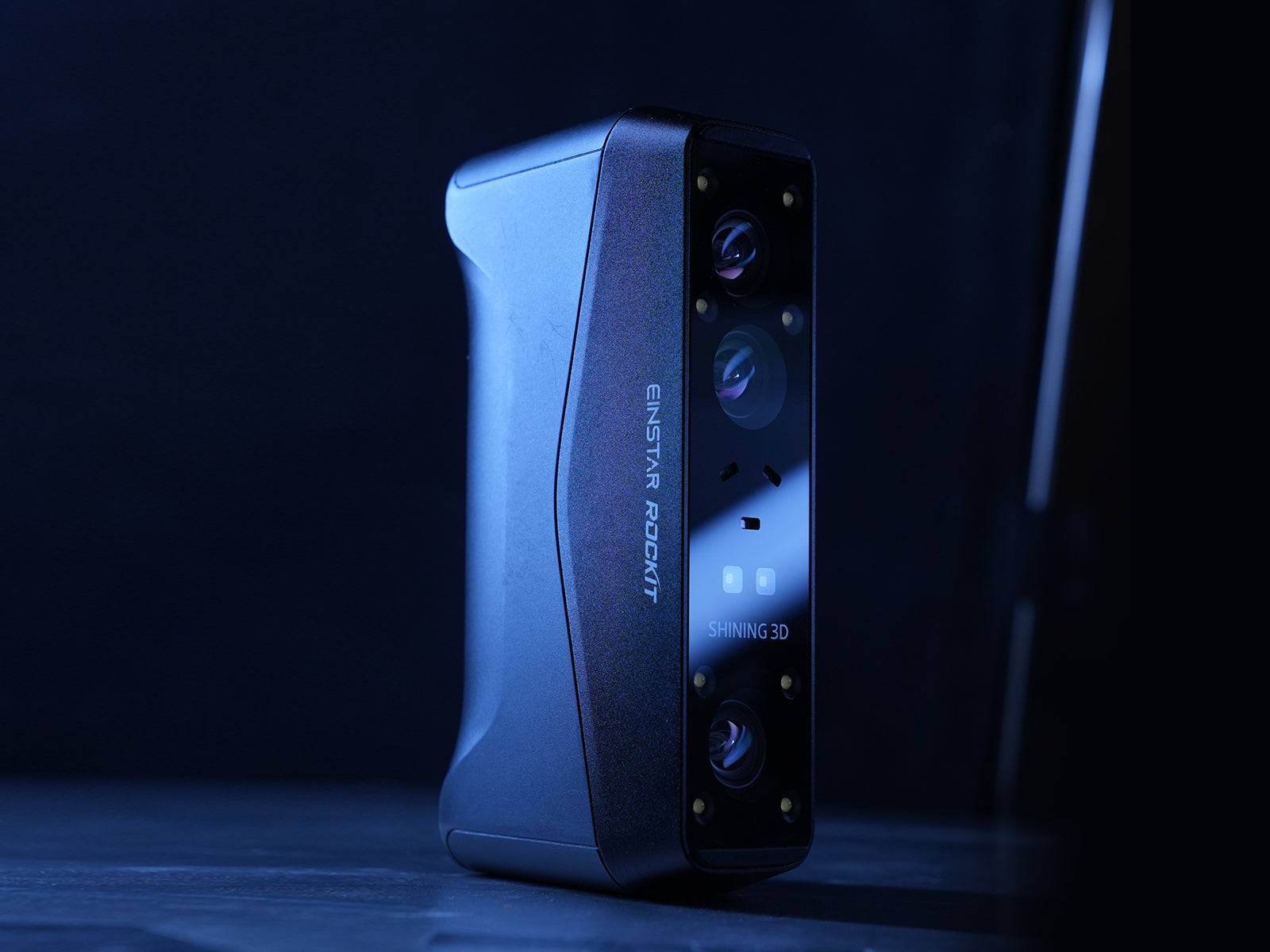
In the automotive industry, precision and efficiency are non-negotiable. From reverse engineering car parts to customization, repair, and aftermarket modification, choosing the right 3D scanner can significantly impact both workflow and results.
This article explores what truly defines the best 3D scanner for automotive applications, focusing on real-world requirements rather than marketing claims.
Why Automotive Applications Demand Specialized 3D Scanning
Automotive components present a unique combination of challenges: complex geometries, reflective surfaces, dark materials, and a wide range of part sizes. Unlike general-purpose scanning, automotive workflows require scanners that deliver consistent accuracy across diverse conditions.
Whether scanning a small mechanical bracket or a full vehicle panel, automotive professionals need tools designed for speed, flexibility, and reliability.

Laser 3D Scanners: The Foundation of Automotive Precision
For capturing sharp edges, fine features, and mechanical details, a laser 3D scanner is often the preferred choice in automotive environments.
Blue laser technology excels at maintaining data quality on challenging surfaces and delivers high-definition geometry essential for reverse engineering and CAD reconstruction. This makes laser-based scanning especially valuable for aftermarket parts and component redesign.
Scanning Black and Reflective Automotive Parts
Many automotive components are painted, anodized, or finished with dark or reflective coatings. Traditional scanners often struggle in these conditions, requiring spray or surface treatment.
Modern automotive-focused scanners that can directly capture black or reflective objects without spray significantly reduce preparation time and keep workshops clean. This capability is a key differentiator when evaluating automotive scanning solutions.
Wireless Scanning for Vehicles and Large Assemblies
Automotive scanning rarely happens on a desk. Vehicles, frames, and large assemblies demand freedom of movement around the object.
A wireless 3D scanner eliminates cable constraints, enabling smoother scanning around cars, interiors, and body panels. Wireless operation also speeds up setup and improves ergonomics during long scanning sessions.
Handling Different Part Sizes with One Scanner
Automotive workflows involve a wide range of components — from small brackets and clips to medium-sized housings and large exterior panels.
The best automotive 3D scanners support multiple scanning modes, allowing users to adapt quickly without switching devices. Hybrid solutions that combine laser and infrared technologies offer the flexibility required for full-vehicle and component-level scanning.
Speed Matters in Automotive Workflows
In professional environments, scanning speed directly affects productivity. High frame-rate scanning allows technicians to capture complete datasets quickly while maintaining stable tracking.
This efficiency is particularly valuable in automotive repair and aftermarket manufacturing, where turnaround time is a critical factor.
Portability and Ergonomics for Workshop Use
Automotive scanning often involves extended sessions and awkward positions. A portable 3D scanner with a lightweight, ergonomic design reduces fatigue and enables more consistent data capture over time.
Portability also supports on-site scanning, mobile services, and outdoor use when scanning vehicles outside the workshop.
Outdoor and High-Light Scanning Scenarios
Automotive professionals frequently scan vehicles outdoors or near large doors and windows. Not all scanners perform well in bright environments.
Scanners capable of operating under strong ambient light conditions ensure reliable results regardless of location, making them better suited for real automotive workflows.
Choosing the Right Automotive 3D Scanner
The best 3D scanner for automotive applications is not defined by a single specification. Instead, it combines laser precision, wireless mobility, surface adaptability, and workflow efficiency.
Within the EINSTAR 3D scanner series , solutions designed around hybrid scanning and wireless operation are particularly well aligned with modern automotive needs.
Conclusion
Automotive 3D scanning demands tools that work reliably in complex, fast-paced environments. By focusing on laser accuracy, wireless freedom, surface compatibility, and adaptability across part sizes, professionals can select scanning solutions that truly support automotive workflows.
For workshops, aftermarket specialists, and manufacturers, choosing the right automotive 3D scanner is a strategic investment that directly impacts efficiency, quality, and long-term capability.
Share:
What to Look for When Choosing a 3D Scanner for Your Workshop
How EINSTAR Rockit Transforms Everyday 3D Scanning Workflows