









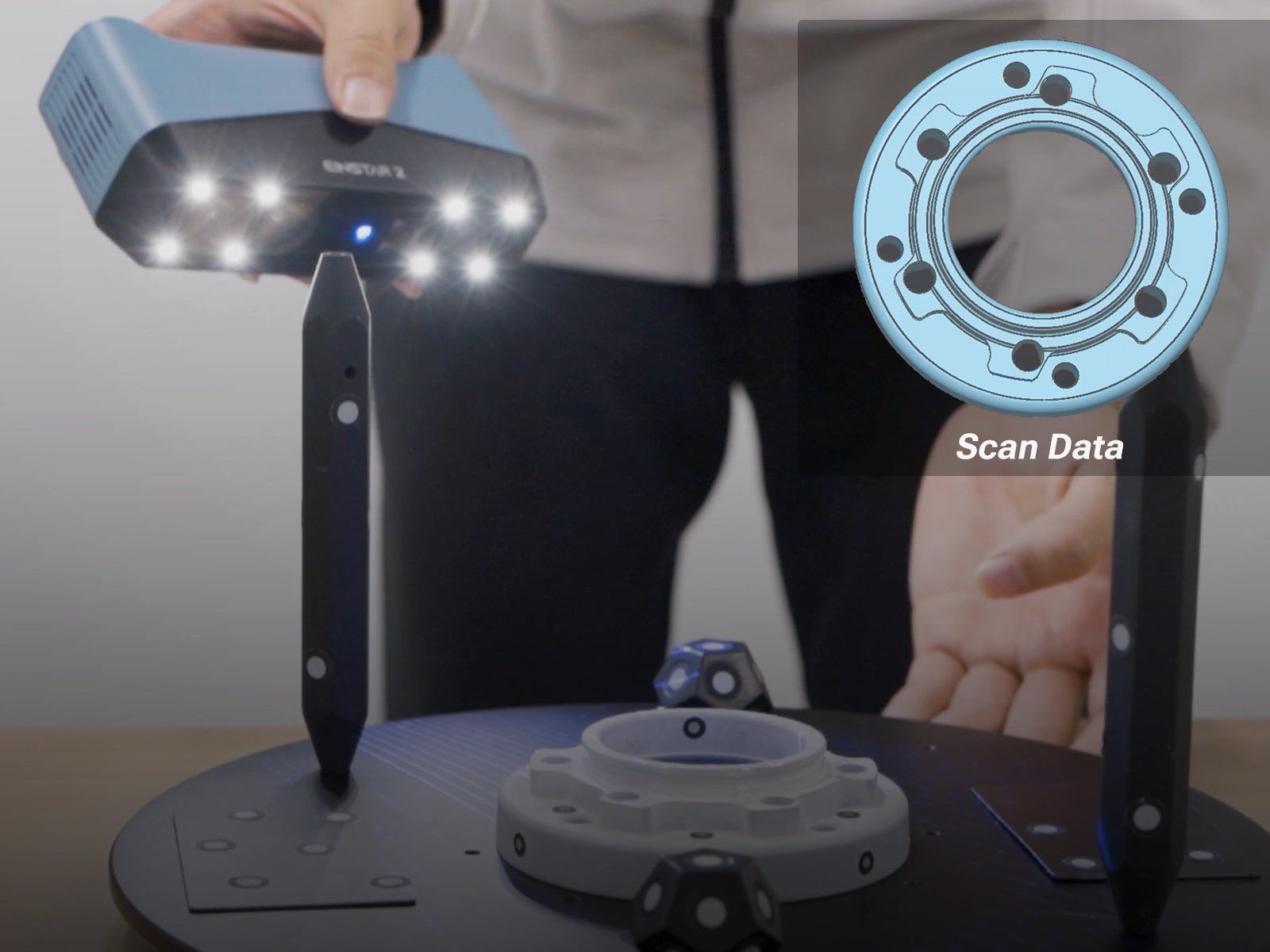
Handscanner für 3D-Druck sind für Bastler, Lehrende und kleine Studios unverzichtbar geworden. Sie ermöglichen die schnelle Erfassung von Objekten, digitale Modellierung und effiziente Prototypenentwicklung. Obwohl Modelle wie der EINSTAR 2 beliebt sind, lassen sich die hier beschriebenen Techniken auf die meisten Handscanner anwenden.
1. Grundlegende Prinzipien des 3D-Scannens
1.1 Strukturiertes Licht-Scanning
- Projiziert ein gemustertes Licht, berechnet die Oberflächenverformung.
- Am besten geeignet für mittelgroße bis kleine Objekte.
- Vorteile: Schnell, sicher; Nachteile: Empfindlich gegenüber Umgebungslicht und Reflexionen.
1.2 Laserscanning
- Nutzt Laserlinien zur Kartierung von Konturen.
- Geeignet für komplexe Geometrien.
- Vorteile: Hohe Detailgenauigkeit; Nachteile: Langsamer, erfordert stabile Bedingungen.
1.3 Photogrammetrie
- Rekonstruiert 3D-Modelle aus Fotos.
- Vorteile: Minimaler Hardwareaufwand; Nachteile: Geringere Präzision, erfordert kontrollierte Beleuchtung.
Tipp: Die Kombination verschiedener Methoden verbessert die Ergebnisse auf reflektierenden oder transparenten Oberflächen.
2. Punktwolkenverarbeitung und -optimierung
- Rauschfilterung: Ausreißer entfernen.
- Ausrichtung: Mehrere Scans für eine vollständige Abdeckung zusammenführen.
- Netzrekonstruktion: Erzeugung wasserdichter 3D-Modelle.
- Topologieoptimierung: Gewährleistet die Nutzbarkeit beim 3D-Druck und der Modellierung.
3. Fortgeschrittene Maker-Techniken
- Scannen von reflektierenden/transparenten Oberflächen mithilfe von Beschichtungen.
- Mehrere Scans zusammenführen, um komplexe Formen zu erfassen.
- Für kleine Objekte eignen sich automatische Drehteller.
- Iterieren: scannen → verarbeiten → ausgeben → validieren → verfeinern.

4. Maker-Anwendungen
4.1 Miniaturen- und Modellbau
Erfassen Sie handgefertigte Prototypen oder Skulpturen für den 3D-Druck oder die digitale Bearbeitung.
4.2 Prototyping kleiner Produkte
Konzeptmodelle in druckbare Prototypen für Elektronik, Werkzeuge oder kleine mechanische Teile umwandeln.
4.3 Bildungs- und Maker-Workshops
Unterrichten Sie Studenten und Teams in digitaler Modellierung, Scannen und iterativer Prototypenerstellung.
4.4 Personalisierte Sammlerstücke
Kreieren Sie Miniatur-Requisiten oder individuelle Figuren mit detaillierten Texturen und Mustern.
4.5 Erweiterte Anwendungen
Handscanner eignen sich zwar perfekt für Bastler, unterstützen aber auch fortgeschrittenere Anwendungsfälle:
- Industriedesign: Schnelles Prototyping von Produktkonzepten und Bauteilmodellen. [Quelle: 3D Printing Industry ]
- Bildung & Forschung: Digitale Datenerfassung für MINT-Projekte, Laborprototypen und kleine Forschungsexperimente.
- Digitalisierung von Kulturerbe und Kunst im kleinen Maßstab: Dokumentation kleiner Artefakte oder Skulpturen für Museen oder Ateliers.
5. Videodemonstration
In diesem Video sehen Sie den EINSTAR 2 Scanner in Kombination mit der EXModel Personal Software. Es demonstriert einen kompletten Workflow vom Scannen eines kleinen Objekts bis zur Erstellung eines detaillierten 3D-Modells, das sich ideal für Reverse Engineering und Rapid Prototyping eignet. Diese visuelle Anleitung ist perfekt für alle, die einen effizienten Scan- und Modellierungsprozess suchen.
6. Häufig gestellte Fragen (FAQ)
-
Frage 1: Für welche Arten von Maker-Projekten eignen sich Handscanner?
A: Ideal für Miniaturen, Modelle, Prototypen und kleine Produktdesigns. Ermöglicht schnelles Erfassen, Modellieren und Iterieren. -
Frage 2: Welche Objekte sind schwierig zu scannen?
A: Glänzende, reflektierende oder transparente Oberflächen. Verwenden Sie Sprays, Mehrwinkelscans, Drehteller und Beleuchtung. -
Frage 3: Wie lässt sich der Scan-Workflow optimieren?
A: Objekte vorbereiten, segmentweise einscannen, Daten bereinigen und zusammenführen, Netz generieren, Topologie optimieren, anhand eines niedrig auflösenden Prototyps verifizieren und anschließend finalisieren. -
Frage 4: Können mehrere Scans zusammengeführt werden?
A: Ja. Mehrere Scans ausrichten und zusammenfügen, um ein vollständiges Modell zu erstellen. Beginnen Sie mit einer groben Skizze und fügen Sie später Details hinzu.
7. Wichtigste Erkenntnisse
- Mit tragbaren 3D-Scannern können Entwickler Ideen schnell in greifbare Modelle umsetzen.
- Das Verständnis von Scanprinzipien, Punktwolkenverarbeitung und iterativen Arbeitsabläufen gewährleistet qualitativ hochwertigere Prototypen.
- Erweiterte Anwendungsbereiche reichen über DIY hinaus: industrielle Prototypen, Bildungsprojekte und Digitalisierung im kleinen Maßstab.
- Mehrere Scans und die Optimierung des Netzes verbessern die Druck- und Modellierbarkeit.
- Die richtige Beleuchtung, Beschichtungen und Drehteller verbessern die Aufnahmequalität bei komplexen Oberflächen.
- Die Wahl geeigneter Handscanner wie EINSTAR 2 unterstützt einen effizienten Arbeitsablauf und konsistente Ergebnisse.
Share:
3D-Scannen im Freien mit dem tragbaren 3D-Laserscanner EinScan Rigil
Was 3D-Scanner können und was nicht: Tipps, Irrtümer & EXModel-Workflow