









● Kugelmittenabstand: 30 mm ± 0,5 mm
● Kugeldurchmesser: Φ10
● Oberflächenrauheit: 1,6 μm
● Material: 440C
● Farbe: Schwarz
● Sphärizitätstoleranz: ≤3 μm
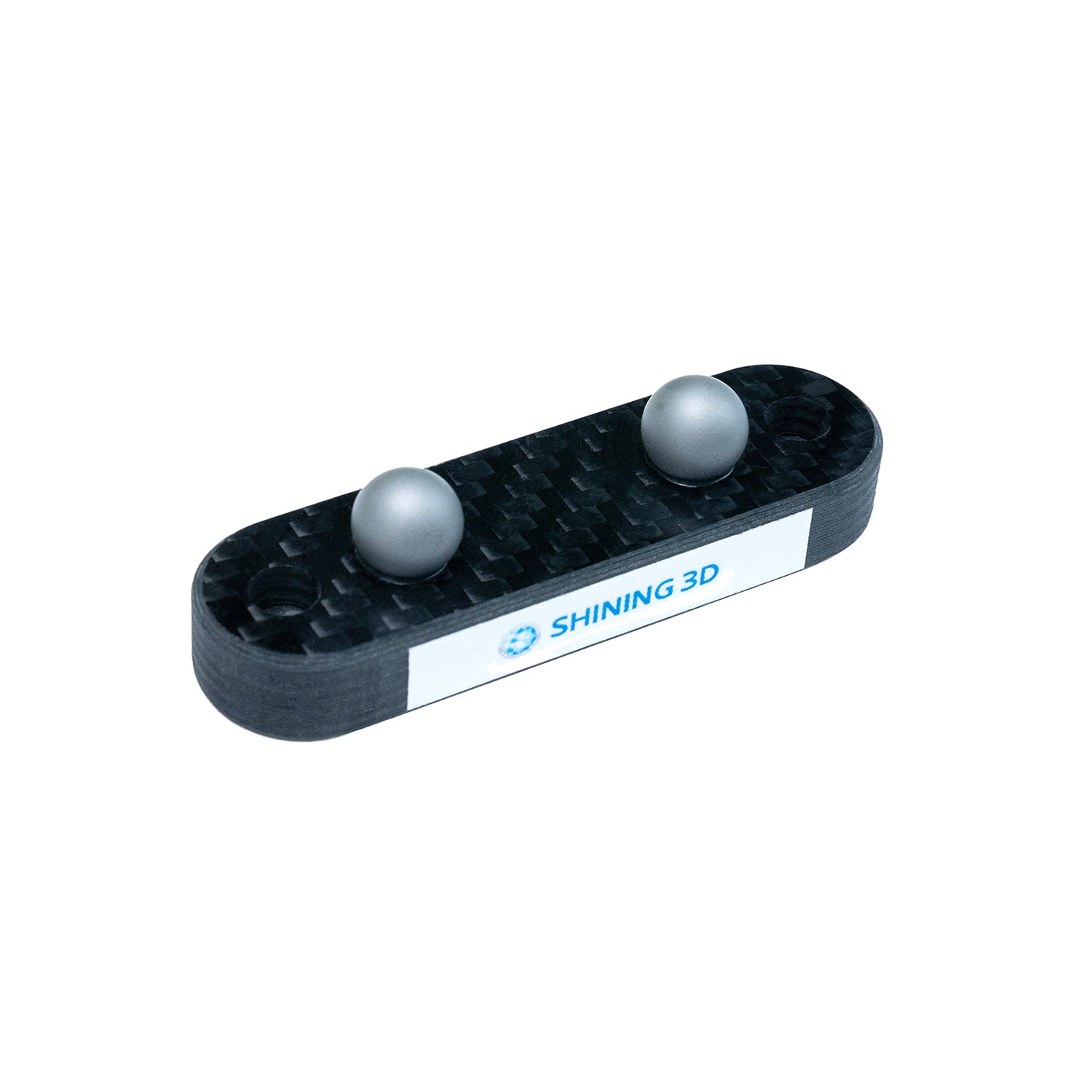
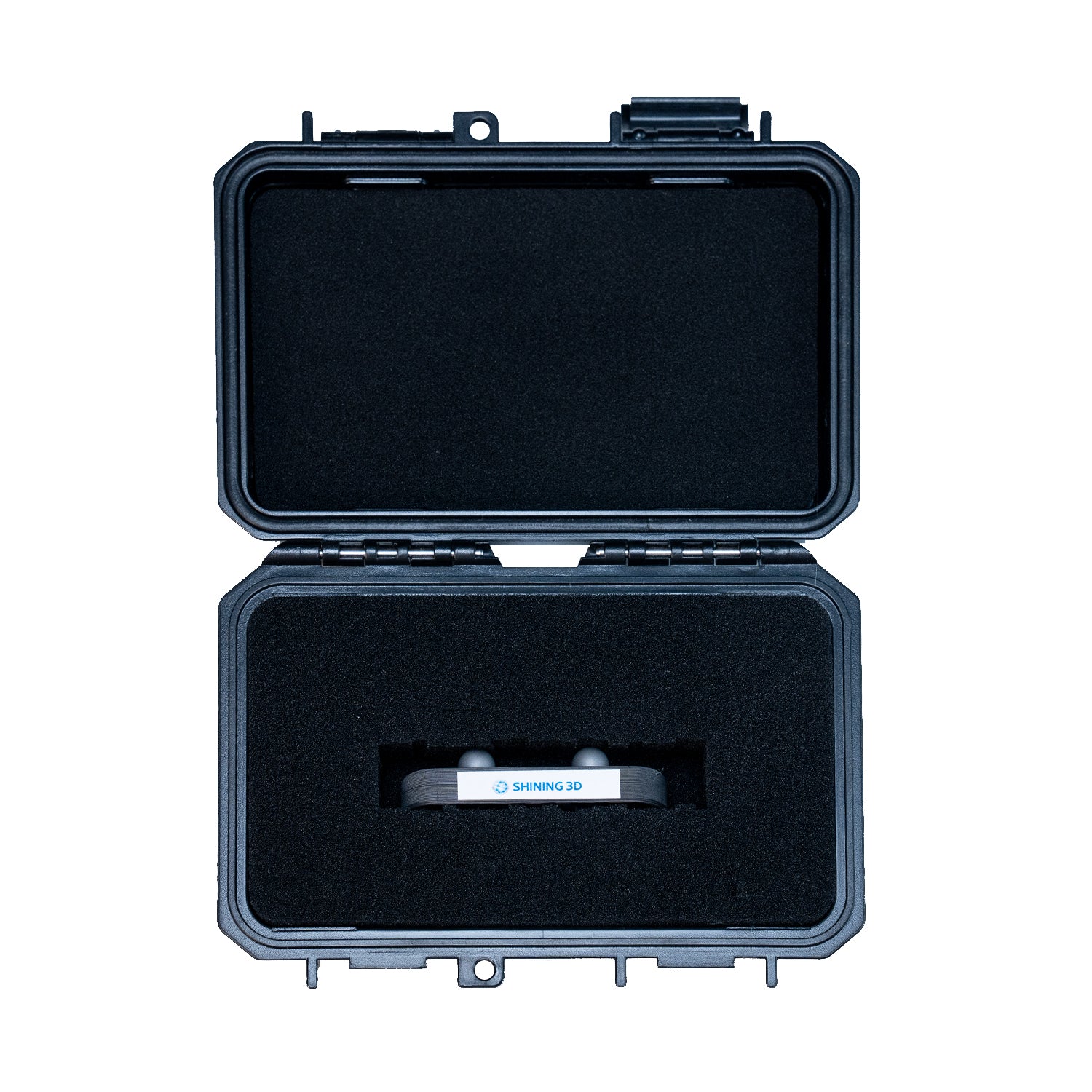
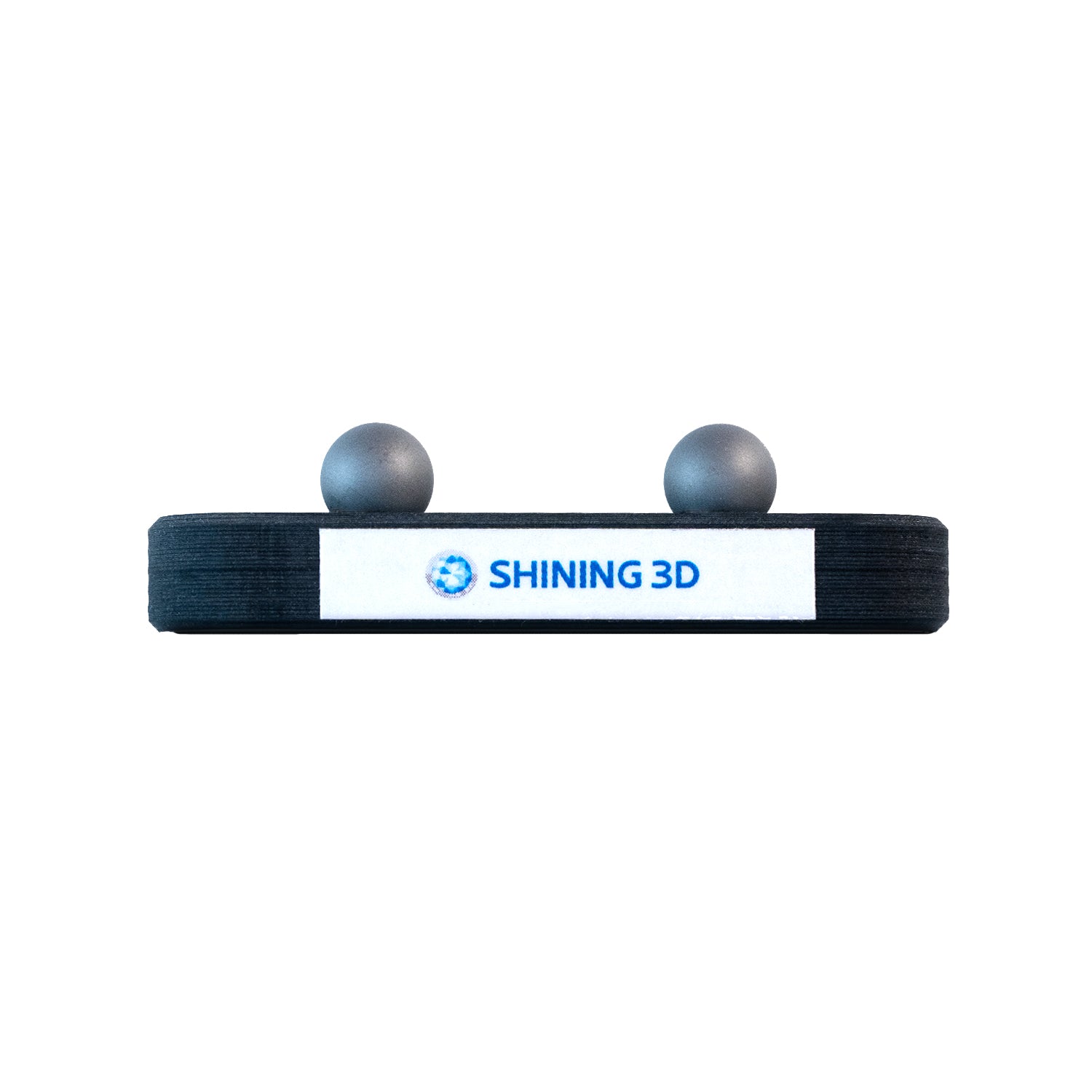
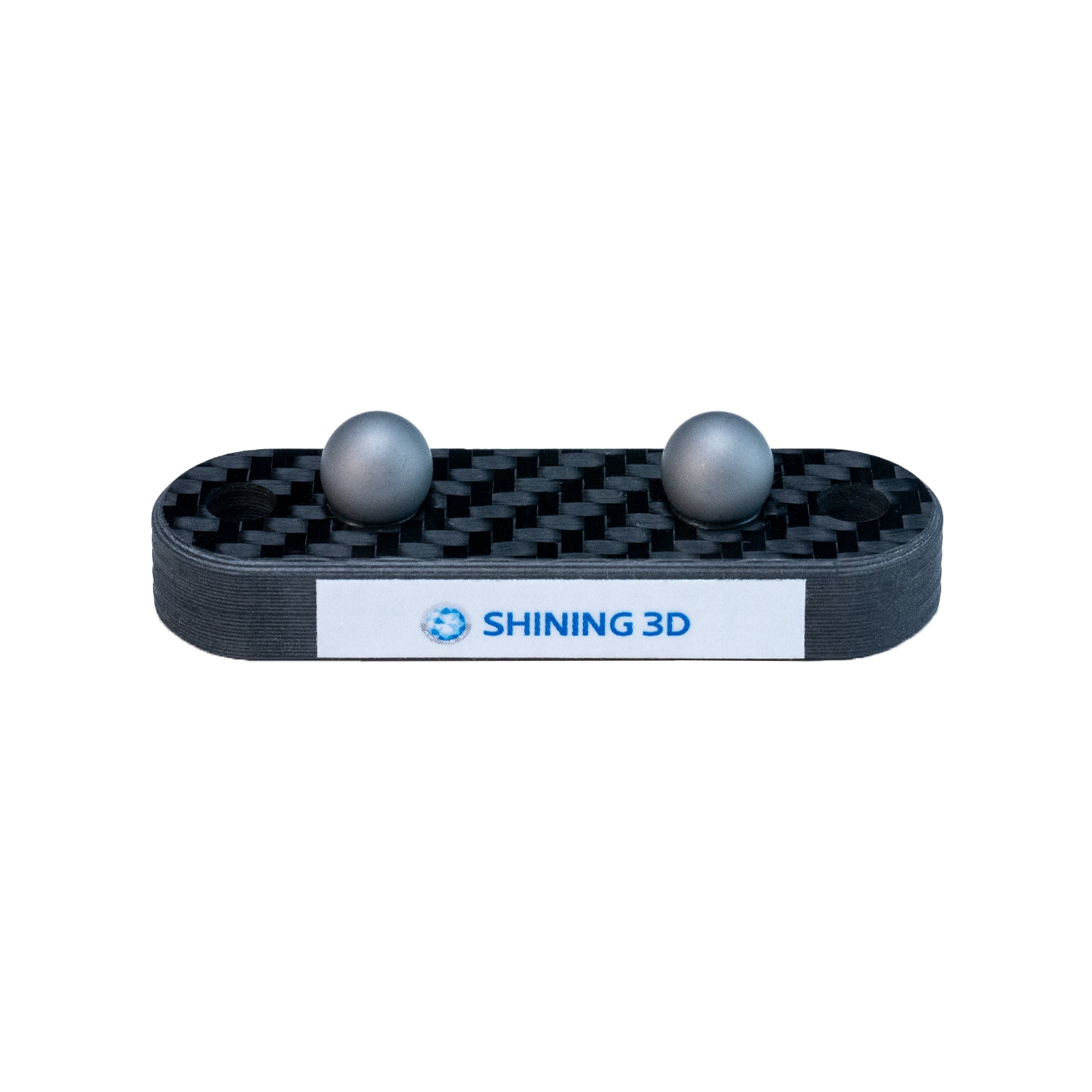
● Kugelmittenabstand: 30 mm ± 0,5 mm
● Kugeldurchmesser: Φ10
● Oberflächenrauheit: 1,6 μm
● Material: 440C
● Farbe: Schwarz
● Sphärizitätstoleranz: ≤3 μm
📦 Production Lead Time:30~40workdays
For purchases, please contact einstar_shop@shining3d.com
Ball center distance:30 mm ± 0.5mm
Ball diameter:Φ10
Surface roughness:1.6 μm
Material:440C
Color:Black
Sphericity tolerance:≤3 μm
Sphere Surface:Matte finish
Sphere Space Tolerance:±0.5mm
(Provided as measured)
Sphere Diameter Tolerance:±0.2mm
(Provided as measured values)
Base Plate Material:Carbon fiber
Base Plate Dimensions:70mm x 20mm x 10mm
Standards:Single-view systems
Conforms to VDI/VDE 2634 Part III
Calibration Certification:
Issued by the Zhejiang Institute of Metrology.
Report includes: Measured values for sphere space,sphere diameter.
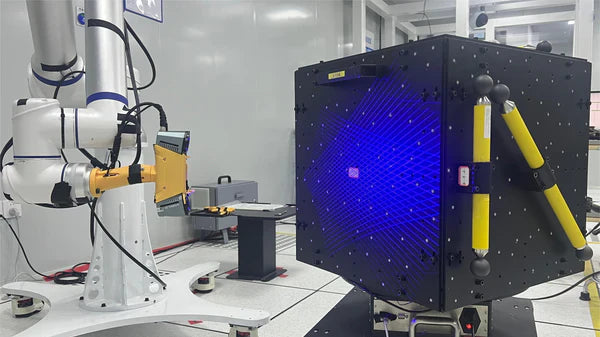
Multi-view systems
Conforms to VDI/VDE 2634 Part III
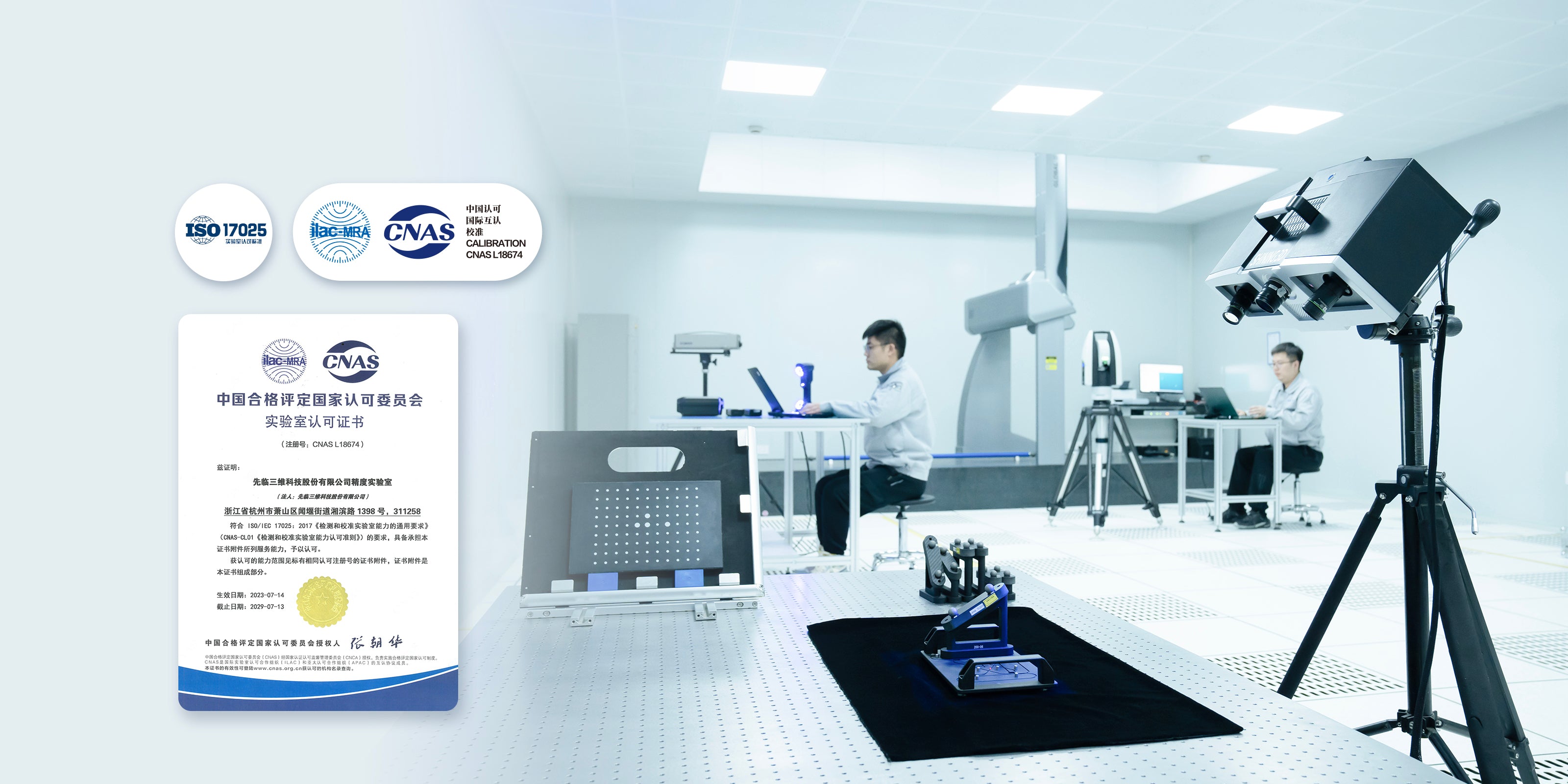
SHINING 3D Lab
To guarantee accuracy, SHINING 3D has been dedicated to researching three dimensional measurement accuracy since its establishment in 2004. The company has developed a comprehensive accuracy assurance system covering the entire process from R&D, production to quality control, and set up an in-house accuracy laboratory.
In 2023, SHINING 3D Accuracy Laboratory was accredited in accordance with the ISO 17025 and received the accreditation certificate issued by CNAS, now authorizing the lab to issue VDI/VDE 2634 calibration certificates for metrology 3D scanners.
● SHINING 3D Accuracy Laboratory’s accreditation by CNAS and its qualification to issue VDI/VDE calibration certificates signify its adherence to international standards. This endorsement ensures the reliability and global recognition of the laboratory’s calibration services, meeting stringent industry requirements and enhancing trust among stakeholders in the precision engineering and technology sectors. SHINING 3D is committed to consistently delivering accurate and dependable digital 3D full-size measurement solutions, contributing to advancements in quality assurance and technological innovation worldwide.
CNAS and International Recognition
CNAS, short for China National Accreditation Service for Conformity Assessment, is a member of the International Laboratory Accreditation Cooperation (ILAC), a global network of accreditation bodies. ILAC comprises over 100 member organizations from around the world, such as DAkkS (Germany), A2LA (US), UKAS (UK), JAB (Japan), among others.
These organizations, along with CNAS, contribute to mutual recognition agreements (MRAs) that promote the global acceptance of conformity assessments through accreditation. This means, products and services certified by CNAS are recognized and accepted in other member organizations.
CNAS: Ensuring Quality and Compliance
CNAS plays a vital role in China’s quality assurance and conformity assessment framework. It is responsible for accrediting various conformity assessment bodies, including laboratories, inspection bodies, and certification bodies.
CNAS employs a rigorous evaluation system to ensure that these bodies meet specific quality and management standards. This process involves comprehensive assessments and audits to verify compliance with international norms. Only CNAS-accredited bodies are authorized to carry out critical assessments that impact public health and safety.
ISO 17025 is an international standard specifically designed for testing and calibration laboratories. It sets the general requirements for the competence of these laboratories, ensuring that they operate consistently and generate reliable results.
As a member of ILAC, CNAS adopts ISO 17025 as a benchmark to assess and accredit testing and calibration laboratories. Obtaining CNAS accreditation signifies that a laboratory complies with ISO 17025 standards and can perform reliable testing and calibration. This accreditation allows CNAS-accredited laboratories to participate in internationally recognized MRAs, ensuring that their test and calibration results are accepted globally.
VDI/VDE 2634 is a set of international standards issued by the Association of German Engineers (VDI) and the Association for Electrical, Electronic & Information Technologies (VDE). These standards are specifically designed for the calibration of optical 3D measuring systems. VDI/VDE 2634 Part 2 covers single-view systems; while Part 3 addresses multi-view systems. The standards ensure the accuracy and reliability of 3D measurements, providing guidelines for calibration procedures and performance verification.
Certificates based on VDI/VDE standards are highly regarded in the field of engineering and technology, providing rigorous guidelines and precision for various technical aspects.


