









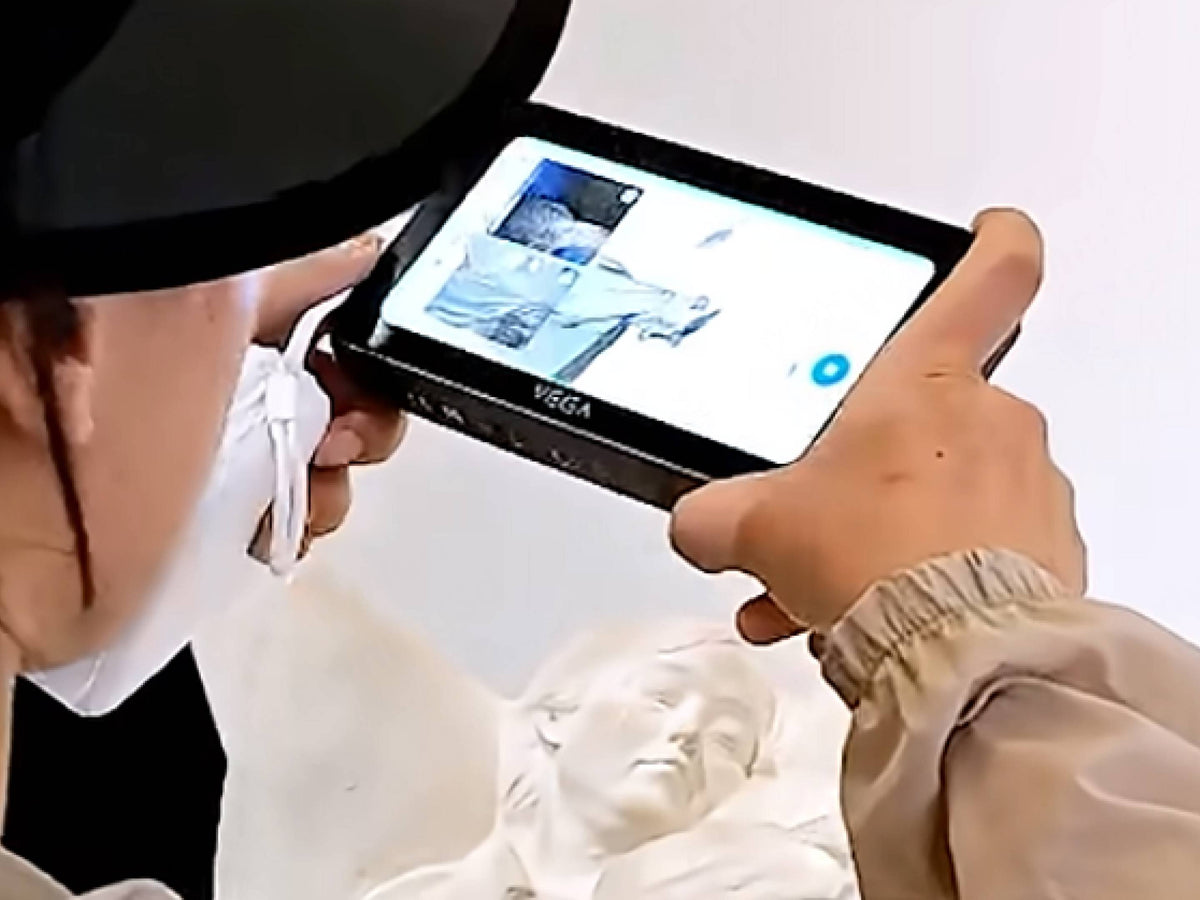
As museums continue to evolve in the digital era, the need to balance artifact preservation with public accessibility has become more critical than ever. Traditional documentation methods are no longer sufficient for capturing the full detail of historical objects. This is why 3D scanning museum artifacts has emerged as a key solution.
Th EINSTAR VEGA 3D scanner offers museums an efficient and flexible way to digitize collections, enabling better conservation, research, and audience engagement.
Why Museums Are Adopting 3D Scanning
Handling and displaying physical artifacts always carries some level of risk. At the same time, audiences and researchers increasingly expect digital access to collections.
By using 3D scanning technology, museums can:
- Reduce physical handling of fragile objects
- Create accurate digital records
- Share collections online with a global audience
- Support research and restoration work
This shift is driving demand for tools like EINSTAR VEGA that combine accuracy with ease of use.

Portable and Flexible Scanning for Real Environments
Museum spaces are often complex—objects may be large, immovable, or stored in restricted areas. The EINSTAR VEGA is designed for on-site scanning, allowing users to work directly in galleries, storage rooms, or excavation sites.
Its portable, standalone design eliminates the need for complicated setups, making it suitable for:
- Large sculptures and installations
- Temporary exhibitions
- Archived collections with limited accessibility
This flexibility helps museums digitize more objects without disrupting existing workflows.
Safe, Non-Contact Digitization
Preserving the integrity of artifacts is always the top priority. The EINSTAR VEGA uses non-contact optical scanning, which means objects can be digitized without any physical interaction.
This approach is especially important for:
- Fragile ceramics and fossils
- Painted or textured surfaces
- Organic materials sensitive to handling
By minimizing risk, museums can confidently scan even their most delicate pieces.
Capturing Detail for Research and Conservation
Accurate 3D data provides valuable insights for researchers and conservators. EINSTAR VEGA captures fine surface details and geometry, allowing professionals to examine objects more closely without repeated handling.
This supports:
- Analysis of craftsmanship and tool marks
- Monitoring of wear or structural changes over time
- Digital reconstruction of damaged or missing parts
Such capabilities make 3D scanning an increasingly important tool in conservation workflows.
Expanding Access Through Digital Experiences
Digitized artifacts can be used far beyond internal documentation. Museums are increasingly using 3D models to create engaging, interactive experiences.
With data captured by EINSTAR VEGA, institutions can develop:
- Virtual exhibitions accessible online
- Interactive displays within galleries
- AR/VR experiences for education and outreach
These applications help museums reach wider audiences while making collections more engaging.
Supporting Long-Term Digital Archiving
Creating digital copies of artifacts is also a way to safeguard cultural heritage. Over time, physical objects may deteriorate or become damaged, but high-quality 3D data ensures that their form and details are preserved.
Digital archives can serve as:
- Reference material for restoration
- Documentation for collection management
- Backup records in case of loss or damage
This makes 3D scanning a valuable long-term investment.
Easy Integration into Daily Workflows
One of the strengths of EINSTAR VEGA is its accessibility. Museum professionals do not need extensive technical expertise to begin scanning.
Different teams can benefit directly:
- Curators can document and organize collections
- Conservators gain reliable data for analysis
- Educators can use 3D models for teaching
The simplicity of the workflow allows museums to adopt 3D scanning without major operational changes.
Conclusion
The adoption of 3D scanning in museums is no longer optional—it is becoming a standard practice for preservation and accessibility. The EINSTAR VEGA provides a practical solution by combining portability, safety, and detailed data capture.
By digitizing artifacts efficiently, museums can protect their collections, support research, and create new ways for audiences to explore cultural heritage.
Share:
EINSTAR 2 3D Scanner: The Fastest Way to Create Models for Popular 3D Printers in 2026